
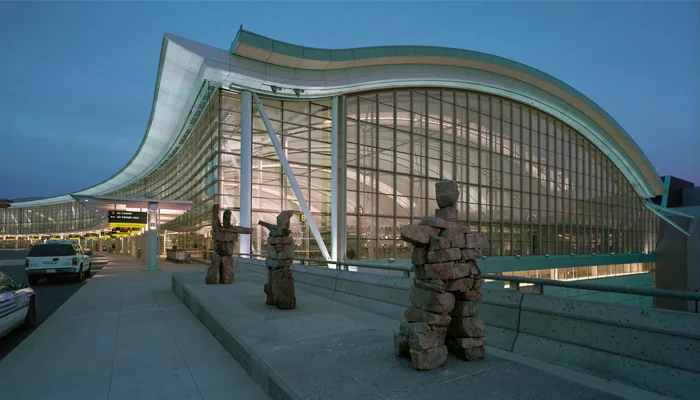
Toronto Pearson International Airport stands as the country’s largest and busiest aviation hub, offering modern facilities and a wide range of services designed for smooth, comfortable travel. Its spacious terminals feature international dining options, shops, lounges, and well-organized transit connections that link directly to downtown Toronto via train, bus, or taxi. Whether you’re starting your journey in the city or connecting onward, Pearson’s dynamic atmosphere and cultural diversity make even a short stop a pleasant and engaging experience.


Good to know …

Free Bathrooms
Located throughout all terminals, both before and after security.
Some areas also include water bottle refill stations nearby.

Hotels
Short wat around.
It’s plenty of hotels in the area.
There are other alternatives in 5Km around.
Related Stories

Wheelchair Accessible
The airport is fully wheelchair-accessible across all terminals.
Free wheelchairs are available, but you must request assistance through your airline (not directly from the airport).

Wi-fi
Wi-Fi at Toronto Pearson is free
Coverage: Wi-Fi is available throughout the terminals — arrival halls, gates, waiting areas, etc.
Terminals information
Terminal 1
- Main hub for Air Canada and Star Alliance airlines.
- Largest terminal at Pearson, with long concourses and high passenger capacity.
- Modern design, extensive dining options, and multiple lounges (Air Canada Maple Leaf, Signature Suite).
Terminal 3
- Serves many international carriers plus WestJet.
- Slightly older infrastructure but easy to navigate and compact.
- Good selection of international restaurants and several independent lounges.
- Terminal 2 was permanently closed and demolished in 2007 as part of Pearson’s major redevelopment. Its functions were absorbed by the expanded Terminal 1, designed to handle higher passenger volumes and modern airline operations.
How to Connect Between Terminal 1 and Terminal 3
- The Terminal Link Train connects both terminals 24/7.
- Ride time: ~2 minutes between terminals.
- Free, frequent service (every 4–8 minutes).
- Easy to access from the public areas of both terminals, ideal for transfers or picking up rental cars/hotels on airport grounds.
Pros
- Well-connected global hub with extensive international routes
- Modern terminals with strong dining and shopping options
- Efficient rail link (UP Express) to downtown Toronto
- High passenger capacity and spacious facilities
- Wide availability of lounges and premium services
- Strong operational infrastructure with five runways
Cons
- Can experience long security and immigration queues at peak times
- Distance from downtown compared with other major cities
- Limited public transport alternatives beyond train and bus
- Occasional weather-related delays, especially in winter
- Higher costs for food, parking, and on-site services
Notes
- UP Express is the fastest option to reach downtown (25 minutes, trains every ~15 minutes).
- Terminal 1 handles most Star Alliance carriers; Terminal 3 serves SkyTeam, oneworld, and many other international airlines.
- Security wait times can fluctuate significantly—online real-time tracking is available on Pearson’s website.
- US-bound travelers clear US customs before departure, reducing arrival time formalities in the US.
- The airport is cashless in many areas, so cards or digital payments are recommended.
- Free Wi-Fi is reliable and fast across both terminals.
- Food courts operate late, but some restaurants close early depending on the terminal.
- The airport is large—walking times between gates can be long, especially in Terminal 1’s international pier.
- Quiet zones and workspaces are available for remote work or rest.
- Winter conditions can cause de-icing delays, so buffer time is useful when connecting.

